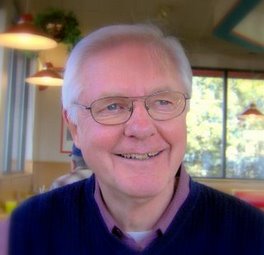
Thursday, August 13, 2009

Holy Spirit

In my “formal” morning time with God today (some call it quiet time, others “discipline of solitude”), I was impressed with the Scriptures that spoke of quenching, grieving or as the NLT renders it “stifle” the Holy Spirit.
The questions arose: who is the Holy Spiritr; what does He do; how is He quenched and what does quench or grieve mean.
Who is He? Jesus introduces Him in John 14 and 16 as the parakletos, the advocate. John 14:15-17a “If you love me, obey my commandments. 16 And I will ask the Father, and he will give you another Advocate, (Jesus was the first) who will never leave you. 17 He is the Holy Spirit, who leads into all truth….

Parakletos refers to counselor, comforter in modern day application. The old English meaning may be more accurate: “someone who strengthens – an encourager.” He is the third person of the Trinity whose operation is encouraging, instructing, strengthening, convicting, guiding – all according to John 16, to bring glory to Christ

It doesn’t seem very productive to quench or grieve Someone who is doing such significant work in my life. So, I better learn what those words mean and how they function.
Vine’s Dictionary describes “grieve – to cause pain or grief, to distress.” Quench is rendered “to hinder an operation.” How do I hinder or cause pain to the Holy Spirit? Allow the Scriptures to speak for themselves.

The command: 1 Thessalonians 5:19 Do not stifle the Holy Spirit.
Scriptural contexts are Isaiah 63:10 – rebellion. Psalm 51:11 – David’s adultry and murder.

Possibly the most descriptive passage for grieving the Holy Spirit is found in Ephesians 4:20-32 20 But that isn’t what you learned about Christ. 21 Since you have heard about Jesus and have learned the truth that comes from him, 22 throw off your old sinful nature and your former way of life, which is corrupted by lust and deception. 23 Instead, let the Spirit renew your thoughts and attitudes. 24 Put on your new nature, created to be like God—truly righteous and holy.
25 So stop telling lies. Let us tell our neighbors the truth, for we are all parts of the same body. 26 And “don’t sin by letting anger control you.”[d] Don’t let the sun go down while you are still angry, 27 for anger gives a foothold to the devil.
28 If you are a thief, quit stealing. Instead, use your hands for good hard work, and then give generously to others in need. 29 Don’t use foul or abusive language. Let everything you say be good and helpful, so that your words will be an encouragement to those who hear them.
30 And do not bring sorrow to God’s Holy Spirit by the way you live. Remember, he has identified you as his own, guaranteeing that you will be saved on the day of redemption.
31 Get rid of all bitterness, rage, anger, harsh words, and slander, as well as all types of evil behavior. 32 Instead, be kind to each other, tenderhearted, forgiving one another, just as God through Christ has forgiven you.

I appreciate the Holy Spirit’s guidance, comfort, instruction and encouragement. I’d prefer not quenching His work in my life. How about you? I hope that this brief study is helpful to you.

Wednesday, August 12, 2009

Yellowstone lessons - 2


“Spirituality is most mature when we arrive at a sense of abundance that is not related to the material. The great sin against God is to live in such a way that others don’t see us as wealthy in the spiritual sense. To live a shabby spiritual life makes others see our God as a poor Father. I don’t have to have material things to have contentment.” More pregnant thoughts from Calvin Miller’s book, Into the Depths of God.

“Contentment does not come from what is grabbed or nabbed. Contentment is not from what you grasp, but from what grasps you.”

I’m noticing that the more of my life I surrender to Him, the more of me He can grasp. The more of me He grasps, the more peace and joy I experience. As you saw in yesterday’s post, He didn’t have much of a grasp of my attitude at rainy, chilly Yellowstone Park. Peace and joy were not descriptors for me. My attitude made my Father look shabby. More lessons from Yellowstone!

Tuesday, August 11, 2009

Yellowstone Park lessons


Returned from Yellowstone Park last night (2 days early). Lessons learned:

1. Heed the weather forcast! Setting up the tent in cold rain, followed by 3 days of rain, sleet and temperature in the 30's was not conducive for a non-camper to be initiated into the ranks of naturalistic pundits! Consequently, the early departure. We'll try it again - someday - not soon!


2. I'm not as spiritually mature as a 70-year-old who has walked with God for 63 years should be. When recounting the event to some friends before we got home, my verbage was very negative: "You can't believe what my first camping experience was like..." That was my focus instead of the great connection with Theresa's children and nine grandchildren; and, the beauty of the surroundings, though viewed through a soggy lense, was amazing.

My opinion of spiritual maturity is this: to walk through a trying time, small or huge, (mine was comparably small), experience and process the normal feelings of the adversity, then focus on what God wants to do in your life through the event - resulting in an attitude of gratitude and praise to the all-powerful, sovereign Creator of the Universe (and me).

I believe one of the results of the experience was not only indicating to me the need for continued growth In Him, but also a preventative to spiritual pride, for which I have a tendency.
Got a long way to go! How about you?

Wednesday, August 5, 2009

Strain to Strength


Diverting from Calvin Miller, Oswald Chamber’s words were so powerful recently. He said, “The typical view of the Christian life is that it means being delivered from all adversity. But it actually means being delivered in adversity. God does not give us overcoming life – He gives us life as we overcome. The strain of life is what builds our strength. If there is no strain, there will be no strength.”


My kids were telling me of a message they had heard lately. The speaker had a car battery on the pulpit. He said, “This battery has two poles, the positive and the negative. If all this battery had was a positive charge, its power would fade and die. The same with the negative pole. Death is the result. However, if you want a battery to be of good use, it needs both postive and negative. We tend to run from the negative. "GOD, get me out of here."

These are two examples of the need for adverisity – call it strain to produce strength (like weight lifters), or the negatives of life that enhance the positive. Our natural bent is to pray that God would get us out of the adversity, when He really wants to use it in our lives to build character qualities that we wouldn’t have without the adversity.

. “Give thanks for all things. Give thanks in all things. For God wants to use all experiences we have to develop our character and to use for His glory.

Will check back with you in about a week. Going to Yellowstone

Tuesday, August 4, 2009

Prayer / Love Relationship


Continuing in Calvin Miller’s Into The Depths of God, breaking the tyranny of the urgent involves the disciplined life, part of which is developing a prayer relationship with the Father.
Miller quotes Fenelon, “Our conversation with God resembles that with a friend. At first there are a thousand things to be told, and just as many to be asked. After a time, however, these diminish , which the pleasure of being together does not.”
In discovering the pleasure of His presence, we learn that prayer is just being with God.The basis of really praying is longing after relationship.
IN conquering the tyranny of the urgent, finding pleasure in just being with God, leads us to fall in love with God. Then we fall in love with the wonder of our togetherness with Him propelling us into praise which is the language of spiritual lovers.

Miller closes the chapter with, “To be a godly disciple means that we transcend the clock, because to be with God mandates that we give our life to become one who waits on God for the sheer pleasure of his company

Monday, August 3, 2009

Tyranny of the Urgent


I love getting email from Montana Gary. His response to the last cobbler post is challenging and inspiring. I want to share it with you.

Quite the contrast between the tyranny of the urgent and the simplicity of the cobbler, the difference between being caught up and living in the moment versus living in God today.

One of the apparent difficulties of the current age is that Christians tend to judge the value of their relationship with God by the moment and not the long duration. In the age of the instant, long continuance is displaced for the satisfaction of the momentary. Yes, it is valuable to have moments with God but feel-good moments cannot be the expression of a life devoted to the Lord; we cannot measure the value of preaching, worship, devotions or even prayer by whether it was a feel-good moment. First, none of these have value to be measured by us rather than God; second, feelings are ill-equipped to assess the value of commitment. While it may feel good to have a moment with God, our enduring perspective is in an ongoing relationship with the Eternal One, to be developed into His image by His Spirit working within. This is a continuing process which may have moments but is not measured by their frequency or emotions.

This is an age where attention spans have drastically been reduced, where preaching must become shorter to match the attention span of the audience, where devotions become “on-the-run” remembrances, where we do not set aside time because we are already committed to filling all of our time with moments, of bursts of attention to whatever hold our fancy.

Instantacy has taken away the desire to take time to slow down, meditate, study, know, learn and relate; we have become a people of momentary gratification in which we grab bursts of experience but have little lasting change before we move on to the next moment. Commitment and satisfaction in the momentary does not promote the enduring and eternal in our minds and souls.

Thanks, Gary.

Saturday, August 1, 2009

A Cobbler's Simple Faith


Calvin Miller uses William White’s lengthy story to illustrate a man who has broken through the tyranny of the urgent.
There once was a king who led his small country with justice and love. Unknown to his subjects, the king would put on a disguise in the evenings and roam the streets of the towns in order to understand life from the perspective of the people.

One night as he walked in disguise, the king was drawn to a simple cottage. The doors and windows of the house were thrown wide open and inside a rather robust man was eating and singing with great volume. Knocking on the door, the king inquired, “Is a guest welcome here?” “A guest is from God!” the man shouted. “please enter and eat wth me.
The king sat down and began to eat the very simple but substantial food that rested on the table. The two men talked freely, immediately feeling a bond between them. Finally the king asked, “What is your trade, my friend?” “I am a cobbler, “ came the enthusiastic reply. “Each day I take my tool kit and wander about town fixing people’s shoes. They give me some pennies, and I put them in my pocket. When the day is over, I spend it all to buy my evening meal.”
“You spend all of your money each day?” the kind asked incredulously. “Don’t you save for the future? What about tomorrow? “Tomorrow is in the hands of God, my friend,” laughed the cobbler. “He will provide and I will praise him day by day.” Before the king left that evening he asked if he might return the next night. “You are always welcome, my friend,” the cobbler replied warmly.

On the way home the king developed a plan to test the simple cobbler. The next morning he issued a proclamation prohibiting the repair of shoes without a permit. When he returned the next evening he found the cobbler eating and drinking and making merry. “What have you done today, dear friend?” the king asked, hiding his surprise.

“When I heard that our gracious king had issued a proclamation prohibiting the repair of shoes without a permit. I went to the well, drew water, and carried it to the homes of people. They gave me some pennies, I put them in my pocket and went out and spent it all on this food,” the cobbler sang. “Come eat there is plenty for all.”

“You spent it all?” the king asked. “What if you cannot draw water tomorrow? Then what will you do?” “Tomorrow is in the hands of God,” the cobbler shouted. “He will provide, and I, his simple servant, will praise him day by day.”
The next morning the king decided to test his new friend again. He sent his heralds throughout the land anouncing that it was illegal for one person to draw water for another. That evening when he returned to visit the cobbler, he found him eating and drinking and enjoing life as before. “I worried about you this morning when I head the king’s proclamation. What did you do?” “When I heard our good king’s new edict, I went out to chop wood. When I had a bundle, I brought it to town and sold it. People gave me some pennies, I put them in my pocket, and when the workday was over, I spent it all on this food. Let us eat.” “You worry me,” said the king. “What if you cannot chop wood tomorrow? “Tomorrow, good friend. is in the hands of God. He will provide.”

Early the next morning the king’s heralds announed that all wood choppers should report immediately to the palace for service in the king’s army. The cobbler-turned woodcutter obediently reported and was trained all day. When evening came, he was given no wages but he was allowed to take his sword home. On the way home, he stopped at a pawnshp where he sold the blade. Then he bought his food, as usual. Returning to his house, he took a piece of wood and carved a wooden blade, attached it to the sword’s hilt and placed it in his sheath.

When the king arrived that evening, the cobbler told him the entire sory “What happens tomorrow if there is a sword inspecion? “ the king asked.” “Tommorrow is in the hands of God, “anwered the cobbler calmly. “He will provide.”
In the morning the officer in charge of the palace guard took the cobbler by the arm. “You are to act as executioner today. This man has been sentenced to death. Cut off his head.”
“I am a gentle man,” the cobbler protested. “I have never hurt another man in my life.”
“You will do as you are commanded.” The office shouted.
As they walked to the place of execution, the cobbler’s mind was exploding. As the prisoner knelt before him, the cobbler took the hilt of hs sword in one hand raised his other palm to the heavens and prayed in a loud voice. “Almighty God, you alone can judge the innocent and the guilty. If this prisoner is guilty let my sword be sharp and my arms be strong. If, however, he is inocent, let his sword be made of wood.”
Dramatically, the cobbler pulled his sword from the sheath. The people were amazed to see that the sword was made of wood. The king, who had watched the events from a distance, ran to his friend and revealed his true identity. “From this day forward you will come and live with me. You will eat from my table. I will be the host and you will be the guest. What do you say about that?”
The cobbler smiled from ear to ear. “What I say is the Lord has provided and you and I together will praise him day by day.”